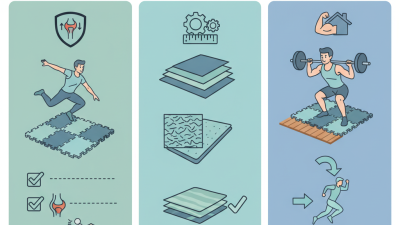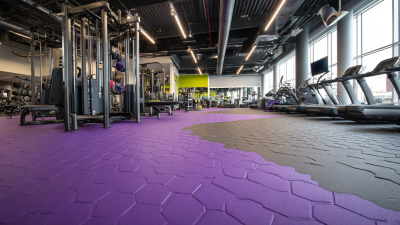
A gym floor must do more than look clean. It should soften impact, support movement, and survive years of repeated use. That is why many facility owners consider Interlocking Gym Mats for training rooms, studios, school gyms, and home fitness areas. Their puzzle-style edges connect firmly without permanent adhesive. This allows faster installation and simpler replacement when one section becomes worn.
“Good athletic flooring should protect people, equipment, and the surface beneath it,” says Tom Reddon, a commercial flooring specialist. His observation reflects a practical concern. A dropped dumbbell can leave a mark. A sprinting athlete needs stable footing. A busy strength area also needs flooring that can handle sweat, friction, and heavy equipment.
Interlocking Gym Mats offer useful flexibility. Facility managers can cover only the lifting zone, then expand later. They can remove sections for cleaning or transport. That matters when a space changes regularly. Dense rubber can reduce noise and absorb some shock, although performance depends on thickness, density, subfloor condition, and installation quality.
Small details matter.
Poorly aligned edges may separate. Moisture trapped underneath can create problems. Some mats may also carry a noticeable rubber odor after installation. These limitations deserve honest attention, not marketing promises.
A reliable choice begins with measurements, traffic expectations, equipment weight, and maintenance needs. The right mat is not automatically the thickest one. It is the one that matches the facility’s real demands. This article examines why Interlocking Gym Mats remain a practical flooring solution, where they perform best, and what buyers should question before installation.
Why Choose Interlocking Gym Mats for Your Facility?
Interlocking gym mats can create a resilient training surface without permanent installation. Their practical value depends on more than thickness or softness. EN 14904 defines force reduction as the percentage of impact force absorbed by a sports floor. The standard’s 25–75% range provides a useful benchmark for comfort, safety, and performance. The number matters.
A mat system within this range can reduce stress during repeated jumps, landings, and floor exercises. However, force reduction is not guaranteed by an interlocking edge alone. Mat density, thickness, subfloor hardness, temperature, and joint alignment can change performance. A surface may feel soft underfoot but still perform poorly during impact testing. That is an easy detail to miss.
Facility managers should request test documentation for the complete installed system, not only the rubber or foam material. Testing should reflect the intended use, including strength training, fitness classes, or indoor sports. Clean, level subfloors also help keep connections tight and loading consistent. In busy rooms, shifted tiles can create small lips that catch shoes. Regular inspections remain necessary. Even careful specifications cannot replace real-world maintenance.

Defining interlocking gym mats through EN 14904’s 25–75% force-reduction range
EN 14904 specifies a force-reduction range of 25% to 75% for area-elastic sports floors. Interlocking mats can be configured as modular floor systems, helping facilities select and maintain surfaces designed around the applicable performance requirements.
Interlocking gym mats are practical when a facility needs stable, replaceable floor protection. The key choice is thickness. A 15–20 mm mat suits general fitness, stretching, kettlebell drills, and moderate dumbbell work. It cushions knees and reduces vibration without making balance exercises feel unstable. Thinner surfaces often feel cleaner underfoot during lunges and step patterns. Yet they can transmit more noise through hard concrete. That trade-off matters.
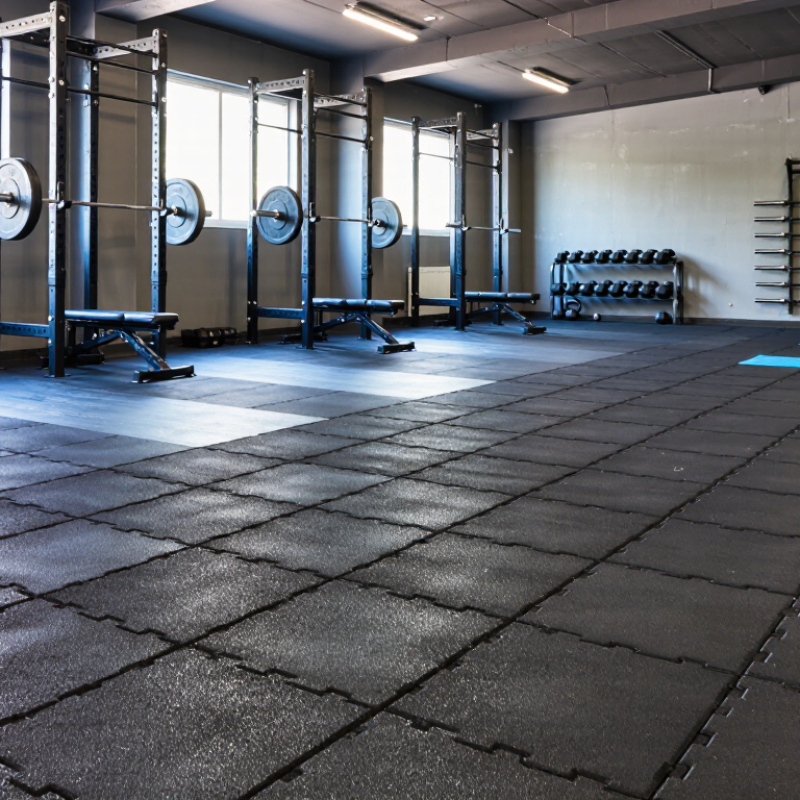
For free weights and repeated impact, 20–30 mm provides stronger shock absorption. A 25 mm surface can soften dropped dumbbells, protect the subfloor, and reduce fatigue during high-volume sessions. Use 30 mm near lifting platforms, sled lanes, or controlled impact training. Thickness alone is not enough. Dense rubber, tight interlocking joints, and a level subfloor affect performance just as much. Mats that separate at the edges create trip points. Small gaps become obvious after chalk, dust, and daily traffic.
Measure the heaviest routine, not the occasional light workout. Check equipment feet, drop height, cleaning methods, and room acoustics before ordering. A thick mat may feel excessive in a quiet studio and hinder rolling equipment. Test one section for smell, compression, and seam movement. This step is easy to skip. It should not be. Local safety requirements and installation guidance still need review, because facility layouts and training loads vary.
| Mat Thickness | Recommended Training Areas | Typical Activities | Impact and Floor Protection | Noise and Vibration Control | Approximate Weight per m²* | Key Advantages | Main Considerations |
|---|---|---|---|---|---|---|---|
| 15 mm | General fitness zones, stretching areas, light-use studios | Bodyweight exercise, mobility work, yoga, Pilates, light dumbbell training | Basic protection against scuffs, minor equipment movement, and low-level impact | ★★☆☆☆ Limited reduction of structure-borne vibration |
Approximately 15–18 kg | Lowest profile; easier access for carts and wheelchairs; economical for large coverage areas | Not intended for repeated barbell drops, heavy free weights, or high-impact landing drills |
| 20 mm | Multipurpose fitness floors and moderate free-weight areas | Kettlebells, dumbbells, circuit training, resistance training, indoor functional workouts | Improved cushioning for routine equipment placement and moderate impact | ★★★☆☆ Moderate control of noise and vibration |
Approximately 20–24 kg | Balanced option for mixed-use rooms; more durable and resilient than thinner mats | May require additional protection beneath regular drop zones or heavy racks |
| 25 mm | Strength-training rooms and functional training areas | Barbell work, deadlifts with controlled lowering, sled work, plyometrics, strength circuits | Strong protection against impact, indentation, and routine heavy-equipment use | ★★★★☆ Good reduction of airborne and structure-borne noise |
Approximately 25–30 kg | Strong balance between shock absorption, durability, stability, and installation height | Heavier to handle; transitions and door clearances should be checked before installation |
| 30 mm | Heavy lifting platforms, impact-training zones, and high-use commercial facilities | Repeated deadlifts, Olympic lifting with controlled drops, functional impact drills, heavy sled use | Highest protection in this range for subfloors and equipment under frequent impact loading | ★★★★★ Best option in this range for reducing vibration and impact noise |
Approximately 30–36 kg | Maximum cushioning and durability within the 15–30 mm selection range | Highest cost, weight, and floor build-up; a dedicated lifting platform may still be required for uncontrolled drops |
ASTM F2772 offers a useful framework for assessing athletic flooring performance. It examines properties such as shock absorption, vertical deformation, and ball rebound. These factors matter when athletes jump, stop, or change direction repeatedly.
Interlocking gym mats can create a stable, replaceable surface when installed correctly. Their joints should sit tightly together, without raised edges or visible gaps. Traction testing should reflect real footwear, dust levels, and moisture conditions. A surface that feels secure during warm-up may become slippery after heavy use. Small details matter.
Shock absorption helps reduce harsh impact during landings and floor exercises. However, excessive softness can affect balance and movement control.
Ball response also needs attention in multipurpose facilities. A basketball may rebound differently on a resilient mat than on a rigid sports floor.
ASTM F2772 measurements can reveal this difference under controlled conditions, but field checks remain valuable. Test conditions are not the whole story.
Facility managers should compare installed samples, not only technical sheets. Walk across the seams. Observe a ball’s rebound from several areas. Check whether repeated loading changes the surface. No mat is perfect. Even careful evaluation can miss problems caused by uneven subfloors or poor cleaning. A documented inspection, completed by qualified flooring professionals, supports safer decisions and more consistent performance.
Rubber and EVA density shape how an interlocking gym floor performs. Density is not simply a quality score. It changes weight, cushioning, stability, and sound behavior. In facility assessments, these differences become clear under repeated traffic and equipment movement.
Dense rubber usually resists tearing, rolling loads, and repeated equipment movement. Its firm surface supports sleds and strength stations without feeling unstable. It also absorbs vibration well, reducing the sharp thud of dropped weights.
However, dense rubber can feel harder during floor exercises. It may transmit impact through a rigid subfloor if installation is poor. Durability still depends on seam design, thickness, cleaning, and temperature.
EVA foam is lighter and often feels more forgiving under knees, backs, and jumping feet. Its cellular structure can soften footfall noise in studios and training rooms. Lower-density EVA cushions well, but it may dent beneath racks or recover slowly after heavy use. Higher-density EVA improves resilience, although it can lose some softness.
The choice is not perfectly obvious. Test samples under real traffic instead of trusting density figures alone. Place a loaded bench overnight, drag a light sled, and listen from the room below. Check seams after repeated assembly.
I would also question thickness claims without examining the subfloor and cleaning routine. Rubber often suits demanding strength areas, while EVA may fit quieter, lower-load zones. A mixed installation can work, but replacement planning becomes less simple.
Why Choose Interlocking Gym Mats for Your Facility?
Planning 1 m² Modular Tiles for Faster Installation and Individual Replacement
When a gym must reopen quickly, flooring installation can become a serious scheduling problem. Interlocking gym mats made as 1 m² modular tiles simplify the work. Staff can align the edges, press the connectors, and create a stable training surface without wet adhesives. In facility projects, this format has reduced disruption around weight areas and functional training zones. Each tile is large enough to cover space efficiently, yet manageable for two-person handling when access is limited. No special machinery is usually required.
The practical advantage continues after installation. If one tile is cut, crushed, or permanently stained, the damaged section can be lifted and replaced individually. The rest of the floor stays in service. This matters beneath squat racks, sled lanes, and dumbbell storage, where impact is concentrated. Keep several spare tiles on site, and record their placement during installation. That small habit makes future repairs faster. Color or texture variation may appear after long use, however. A replacement can look newer than surrounding tiles.
Reliable results depend on preparation, not only the interlocking design. Inspect the subfloor, remove dust, and correct uneven areas before laying tiles. Leave suitable clearance at walls and follow the manufacturer’s guidance for expansion and cleaning. Poor alignment can create open seams, especially when the base moves. We have seen rushed installations fail for this reason. The 1 m² format is efficient, but it is not magic. Plan doorways, columns, and heavy equipment footprints before ordering. A simple layout drawing can prevent unnecessary cuts and wasted material.