








Ultimate Density Selection Guide for EVA Foam Yoga Mats: Matching Standards for Different Exercise Scenarios
In the foreign trade procurement, wholesale and customization of Yoga Mats,EVA foam density is the core parameter that determines the mat’s comfort, support, anti-slip performance and durability, and it is also one of the most concerned technical indicators for overseas buyers. Many importers, brand distributors and cross-border sellers often encounter after-sales problems such as excessive softness and sagging, overly hard and uncomfortable pressure on bones, chipping and deformation after long-term use, and loss of resilience due to improper density selection. From a professional procurement perspective, this article elaborates on the applicable density standards of EVA yoga mats for different exercise scenarios, helping buyers make precise selections, avoid quality risks, and meet global fitness product procurement demands.💯
In accordance with professional sports material standards, the density of EVA foam yoga mats is commonly measured in kg/m³, with the industry’s general applicable range standing at 33–100 kg/m³. Different densities correspond to entirely different athletic performance and application scenarios, and there is no one-size-fits-all universal density. Accurate differentiation of density parameters is the key to purchasing high-quality EVA yoga mats that meet the market standards of Europe, America, Australia and other overseas regions.
For beginner yoga and daily home fitness scenarios, low-density EVA foam of 40–60 kg/m³ is the optimal choice. Yoga mats in this density range feature lightweight texture and excellent flexibility with superior cushioning performance. They effectively relieve pressure and soreness on the knees, elbows and spine during kneeling and lying postures, perfectly meeting beginners’ needs for gentle stretching and relaxation training. Meanwhile, low-density EVA material is lightweight, easy to fold and store, and convenient for transportation, greatly reducing cross-border logistics costs. It is a best-selling specification for supermarket wholesale and cross-border retail.💥
For professional yoga, high-intensity body shaping and physical training scenarios, medium-density EVA foam of 60–90 kg/m³ serves as the industry’s gold standard. It is also the mainstream density adopted by European and American fitness brands, balancing support and cushioning performance perfectly. It solves the pain points of insufficient support from low-density mats and overly hard texture causing physical discomfort from high-density mats. In high-load movements such as planks, downward-facing dog poses and strength shaping, medium-density EVA yoga mats are not prone to sinking, can closely fit the ground and provide stable anti-slip grip. They also deliver outstanding resilience with a low permanent compression set rate, resisting edge curling, surface peeling and sagging under long-term frequent use, greatly enhancing durability. It is ideal for professional fitness studios and high-end brand customized orders.🌱
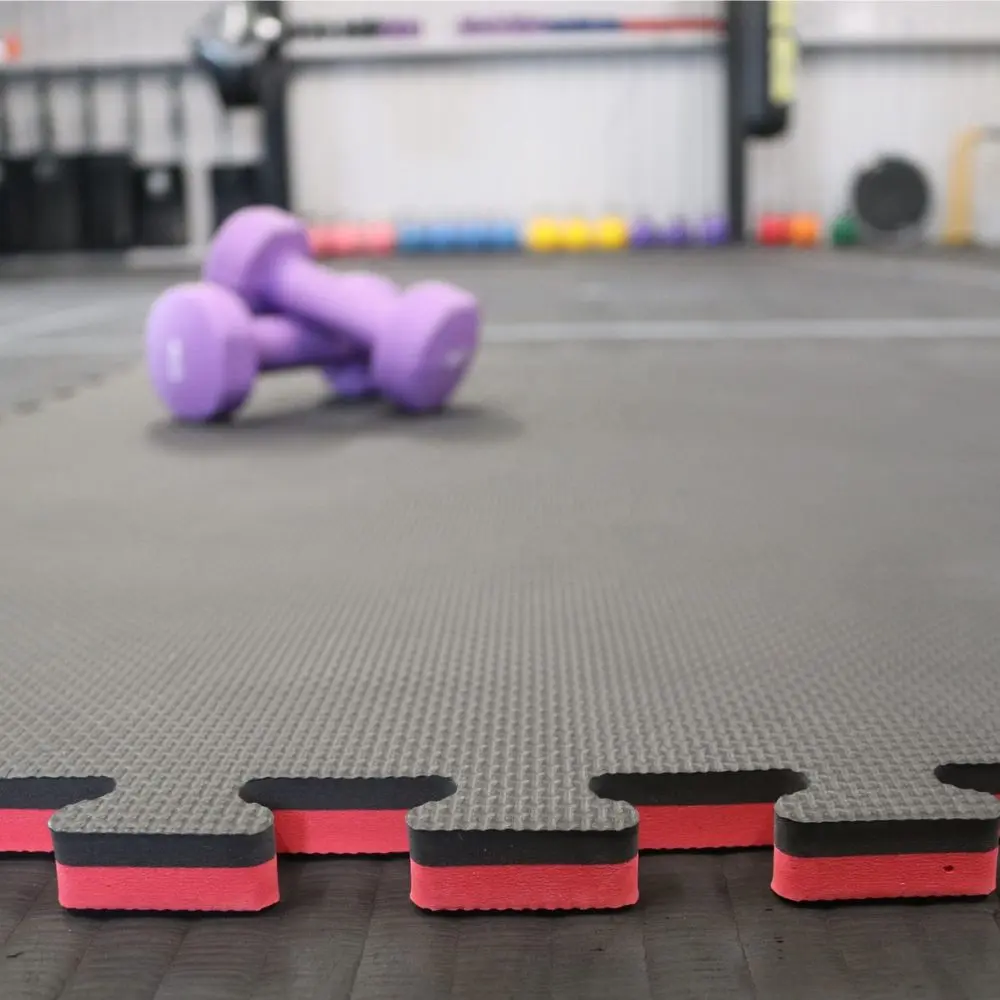
Many buyers fall into the misconception that the higher the density, the better. In fact, high-density EVA foam above 90 kg/m³ is not suitable for conventional yoga practice. Such material is relatively hard with significantly weakened cushioning performance, and is more applicable to high-intensity fitness, jump training, outdoor anti-slip Floor Mats and similar scenarios. When used for yoga practice, it causes obvious bone pressure discomfort and ruins the exercise experience. Blindly pursuing ultra-high density not only increases raw material and transportation costs, but also leads to poor end-user experience, affecting product repurchase rate and brand reputation.🌳
Beyond the core density parameter, professional procurement also requires matching supporting craftsmanship and material standards to meet global export compliance requirements. Premium export-grade EVA yoga mats adopt a standard VA content of around 35% and fine closed-cell foaming technology, ensuring a bubble-free, chip-resistant and curl-proof finish. Meanwhile, they comply with REACH, RoHS and CPSC environmental and safety standards, featuring formaldehyde-free, formamide-free and low-VOC properties to satisfy market access regulations in mainstream European and American markets.🌵
In summary, you may directly follow this procurement standard for EVA yoga mat density selection:
Choose 40–60 kg/m³ for beginner home use; opt for 60–90 kg/m³ for professional yoga and high-frequency training. Avoid inferior ultra-low density and unreasonably excessive density specifications. Combined with compliant production craftsmanship, you can develop high-quality products tailored for the global market.🥤
As a professional foreign trade manufacturer of EVA foam yoga mats, we support full density range customization, thickness adjustment, pattern customization and private logo OEM services. All products comply with international environmental and safety standards. If you need bulk solutions for EVA yoga mats precisely matched to market demands, feel free to contact us for free samples and customized quotations at any time.🍭
Phone: +86 13509077236
Email: lorraine_lao@honloy.com
Web: https://aiwebs53ghr.cmerweb.com/