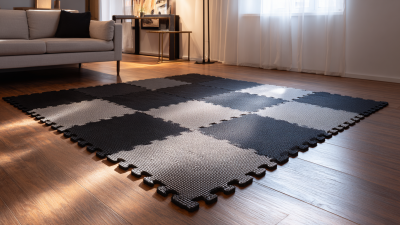
Why Choose Interlock Foam Mats for Your Business?
A busy workshop reveals the value of flooring in small details: a worker shifts weight beside a packing bench, while a dropped tool meets a cushioned surface. An Interlock Foam Mat can create a more comfortable, modular standing area without permanent installation. Its linked tiles are easy to arrange around workstations, counters, or fitness zones. Still, comfort depends on the foam’s density, thickness, surface texture, and the tasks performed. A soft mat is not automatically a suitable mat.
The U.S. Bureau of Labor Statistics reported 2.6 million nonfatal workplace injuries and illnesses in private industry during 2023; 946,500 cases involved days away from work. These figures cover many causes, not flooring alone, but they underline why workplace conditions deserve careful attention. Cornell ergonomics researcher Alan Hedge is widely associated with the principle, “The best posture is the next posture.” A mat cannot replace movement, safe work practices, or an ergonomic review. It may, however, add cushioning and help define a standing area.
Choose with evidence, not appearance alone. Check the manufacturer’s load guidance, tile connection design, cleaning instructions, and performance under your actual conditions. Test a sample where people stand for a full shift. Notice whether edges separate, shoes grip, and the surface compresses unevenly. Small trials matter. One caution: foam can wear, and no product suits every workplace. A thoughtful purchase treats the Interlock Foam Mat as one practical part of a broader comfort and safety plan.
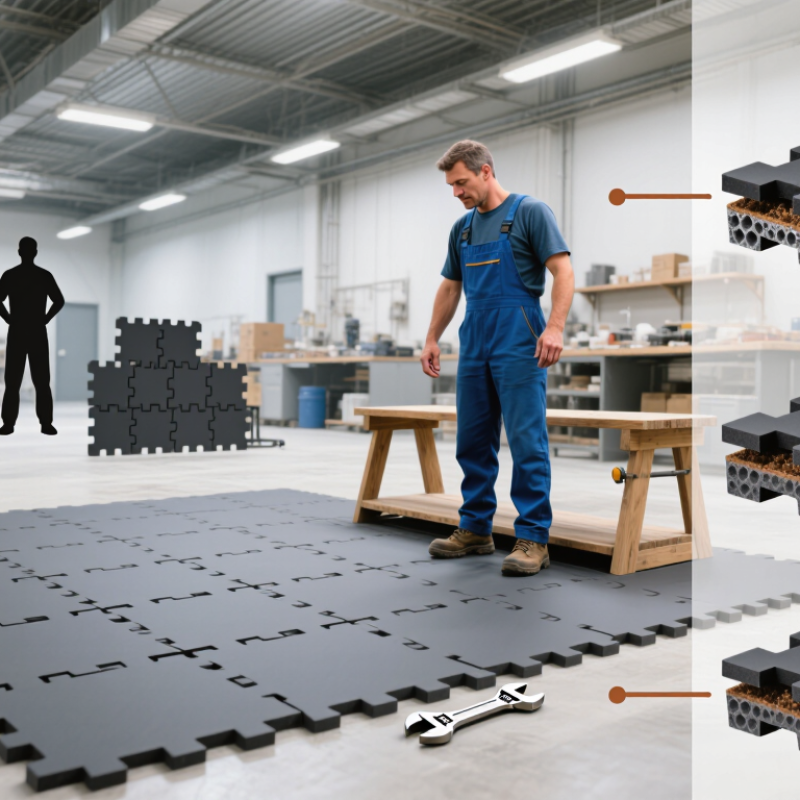
What Interlocking Foam Mats Are and How They Work
Interlocking foam mats are modular floor panels with shaped edges that connect to form a larger surface. Each panel usually has tabs and matching slots along its sides. Align the edges and press them together; joined pieces resist shifting better than loose mats. Some systems also use border strips for a cleaner perimeter.
The panels can be separated and rearranged when a work area changes. No glue is typically needed. Not complicated.
For a small packing station, a few panels can cushion the floor beneath a standing worker. In a gym or training room, connected sections create a more consistent surface for movement. Foam thickness and firmness vary, so check product specifications against the tasks and equipment used.
A soft panel may feel comfortable underfoot, but it can compress under a heavy cart. The seams matter too. Dust, moisture, or a poorly aligned edge can make connections less secure. Wipe the floor before installation, then press each joint and inspect the perimeter.
Foam is not indestructible; repeated dragging can wear the surface. That’s one drawback worth watching.
Key Materials and Performance Features
Interlocking foam mats perform best when their materials suit the workspace, not just the budget. Many commercial tiles use closed-cell EVA or polyethylene, which resist moisture and are easy to wipe clean. Yet softness alone says little about durability. Ask for material density, thickness, compression-set results, and tear-strength data tested using ASTM D3574 methods. These measurements help compare samples, but they cannot predict every floor, load, or cleaning routine. Check the edges. They should sit flush and stay connected when a loaded cart crosses a seam. Small gaps collect grit.
Cushioning also deserves careful consideration. Smith and colleagues’ 2017 American Journal of Epidemiology study followed 7,320 Ontario workers. Predominantly standing jobs were associated with roughly twice the incident heart-disease risk of predominantly seated jobs. This association does not prove that foam mats prevent disease. It does underscore the value of treating cushioning as one part of workplace ergonomics, alongside task rotation and sit-stand options. Request test records and trial tiles through a full shift. Watch for bottoming out. Foam may feel supportive at first, then flatten under repeated point loads; checking it in the actual workspace is worth the extra effort.
Business Settings That Benefit from Foam Flooring
Interlock foam mats can suit fitness studios, childcare rooms, and retail stock areas where staff stand or move for long periods. In a small training studio, textured tiles can create a defined stretching zone beside harder flooring. Their cushioned surface may make floor exercises more comfortable. It also softens minor bumps from dropped light equipment. Not every room needs them.
In childcare spaces, removable sections can help staff refresh a play area or replace a damaged tile. Retail back rooms may benefit too, especially near packing tables where workers stand to label boxes. Choose a surface texture that matches the task. Deep patterns can trap crumbs or dust, so cleaning may take longer than expected.
Foam flooring has limits. It can compress under heavy machines, rolling carts, or concentrated loads, and some surfaces may not suit frequent exposure to oils or harsh cleaners. Check the product’s load guidance and cleaning instructions before installation. Measure door clearances as well; added floor height can catch a door edge. A sample tile left in the actual room for a few days can reveal whether the surface feels stable and cleans easily.
How to Select Mats for Workplace Needs
Choosing interlock foam mats starts with the work people actually do. A packing station may need cushioning for long periods of standing, while a workshop may need a firmer surface for carts and equipment. List the main tasks, expected foot traffic, and the tools used nearby. Then compare mat thickness and density against those conditions. Softer is not always better; it can feel unstable under rolling loads.
Measure the floor before ordering, including corners, posts, and door clearances. Check that the tiles lock together firmly and that exposed edges can be finished safely. In damp or dusty areas, ask how the surface handles cleaning and whether moisture can collect underneath. Fit matters. A small gap can spread as mats shift, especially on uneven flooring. If possible, test a sample through a normal shift. One detail may surprise you.
Tips: Watch how workers stand, turn, and move materials before choosing a layout. Keep a few spare tiles for damaged sections. Recheck the floor after installation; interlocking mats still need inspection and routine cleaning. Do not assume one thickness suits every department.
Installation, Maintenance, and Long-Term Value
Why Choose Interlock Foam Mats for Your Business?
Installation, Maintenance, and Long-Term Value
Interlock foam mats are practical when a work area needs cushioning and a quick, adaptable floor covering. Start with a clean, dry, level surface. Measure around doorways, counters, and fixed equipment before connecting tiles. Press each seam together firmly; even small gaps can catch shoes or cart wheels. Leave room for edges to expand slightly in warm conditions.
Installation is only part of the decision. The U.S. Bureau of Labor Statistics recorded 450,540 nonfatal workplace cases involving falls, slips, and trips in 2022. Mats cannot eliminate these hazards, but a flat, well-maintained surface can help avoid adding trip points. Check seams daily in busy areas. Replace tiles that curl, split, or stay compressed. Small checks matter.
For routine care, sweep grit before damp-mopping with a mild cleaner approved for the mat material. Harsh solvents and excess water may damage foam or seep beneath tiles. Inspect the floor after cleaning. A slippery residue defeats the purpose. For long-term value, compare the purchase price with cleaning time, replacement costs, and the ease of swapping one damaged tile. Foam may not suit heavy rolling loads; test a sample under actual equipment before covering the room. That step takes time, but skipping it can cost more.