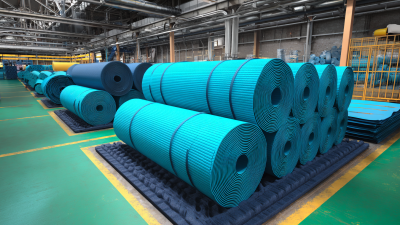
Why Choose Eva Floor Mats for Global Buyers?
Why Choose Eva Floor Mats for Global Buyers?
Global vehicle production creates a demanding market for practical interior products. The International Organization of Motor Vehicle Manufacturers reported approximately 93.5 million vehicles produced worldwide in 2023. Each vehicle needs protection from water, dust, mud, and daily abrasion. For distributors, Eva Floor Mats offer a lightweight option with useful resistance to moisture and repeated use. The material is also easy to cut, mold, and customize for different vehicle platforms.
Market reports support this opportunity. Grand View Research identifies growing demand for automotive floor mats, driven by vehicle ownership, replacement needs, and interior customization. The International Energy Agency also reported that global electric car sales exceeded 17 million in 2024. Electric vehicles often require precise cabin-fit accessories, because their interior layouts can differ from traditional models. A well-designed EVA mat can follow these contours more closely. It can also reduce shipping weight compared with heavier rubber alternatives.
Still, material choice alone does not guarantee quality. That matters. Global buyers should examine thickness, edge height, odor performance, anti-slip backing, and compression recovery. Supplier test reports should clarify durability under heat, cold, moisture, and repeated foot traffic. Compliance documents may also need review for destination-market chemical requirements, including REACH or similar standards. These checks are not exciting, but they prevent expensive returns.
Eva Floor Mats are not automatically the best solution for every climate or vehicle. Some buyers may need stronger abrasion layers or deeper channels. The better decision comes from matching EVA construction with actual driving conditions, customer expectations, and verified supplier performance. That practical balance explains why many international buyers continue to consider EVA for scalable automotive accessory programs.

What Are EVA Floor Mats and How Are They Made?
EVA floor mats are made from ethylene-vinyl acetate, a lightweight polymer with useful flexibility and shock absorption. Global buyers often choose them for vehicles, gyms, workshops, and children’s play areas. The manufacturing process usually starts with polymer pellets, colorants, and selected additives. These materials are blended under controlled heat. Small errors matter.
The compound is then expanded through foaming, creating tiny air cells inside the sheet. Molding shapes the material into grooves, borders, or interlocking sections. After cooling, workers trim the edges and inspect thickness, surface texture, odor, and dimensional stability. Reliable suppliers should provide material specifications and batch records. Independent testing can also check slip resistance, compression recovery, and heavy-metal limits.
Tips: Ask for a sample before placing a large order. Compare thickness at several points, not only the center. Check whether the mat curls after storage. A strong chemical smell deserves investigation. Packaging also matters because heat and pressure can deform foam during long transport. No production method is flawless; even a well-made mat may show slight color variation. The important question is whether variation stays within agreed tolerances. Buyers should define those tolerances clearly, including size, hardness, color, and acceptable surface marks. That simple step prevents many disputes.
Which Features Make EVA Floor Mats Suitable for Global Markets?
Why Choose EVA Floor Mats for Global Buyers?
Which Features Make EVA Floor Mats Suitable for Global Markets?
Global buyers need floor mats that perform across different climates, vehicles, and shipping conditions. EVA is lightweight, flexible, and resistant to common moisture exposure.
Grand View Research valued the global EVA market at approximately USD 11.63 billion in 2023.
It also forecasts steady growth through 2030. This trend reflects wider demand for adaptable polymer materials.
EVA floor mats are easy to cut, shape, and fit. Their closed-cell structure helps reduce water absorption during rainy seasons or winter use. The material also supports textured surfaces, raised edges, and molded channels. These details help trap mud near the vehicle doorway.
OICA reported more than 93.5 million motor vehicles were produced worldwide in 2023.
Such production volume creates varied fitting requirements. Standardized molds can reduce these export challenges.
EVA mats are also light, which can lower freight weight. They usually produce less handling fatigue during installation. However, no material is perfect. Poor formulation may cause odor, curling, or weak resistance to heat. Testing should include dimensional stability, abrasion, and water exposure. ASTM and ISO-based laboratory methods can improve comparison between suppliers. Buyers should request test records, material specifications, and sample approval before larger orders.
Small details matter.
A mat that looks attractive may still drain poorly.
How Do EVA Floor Mats Compare with Other Flooring Materials?
Why Choose EVA Floor Mats for Global Buyers?
How Do EVA Floor Mats Compare with Other Flooring Materials?
EVA floor mats offer a practical balance between cushioning, weight, and maintenance. Their closed-cell foam structure resists water absorption during routine cleaning. A damp cloth usually removes dust, mud, and small spills. They also feel warmer underfoot than ceramic or bare concrete. This matters in garages, play areas, workshops, and temporary exhibition spaces.
Compared with rubber mats, EVA is lighter and easier to cut or install. Rubber usually handles heavy equipment and constant traffic better, but it can feel denser and may produce a stronger odor when new. PVC mats often provide firmer surfaces and sharper patterns. However, some PVC products feel less comfortable during long standing periods. Carpet offers warmth and softness, yet it can retain moisture, grit, and stains. Wood and ceramic look more permanent, but they provide less impact absorption.
Performance still depends on density, thickness, surface texture, and joint design. A thin EVA mat may compress under a metal rack or pointed chair leg. It can also lift at the edges if the floor is uneven. Sunlight, heat, and strong solvents may shorten its service life. That weakness deserves attention. Buyers should test samples under local temperatures, cleaning habits, and expected loads. Small details matter, including slip resistance, odor after unpacking, cutting accuracy, and whether replacement sections remain available.
EVA floor mats typically combine very low density with low water absorption. This makes them lightweight for international shipping, easy to handle during installation, and suitable for damp areas. The figures shown are representative typical values for common flooring materials; actual performance varies by formulation, structure, and manufacturing process.
What Standards and Customization Options Should Buyers Consider?
Why Choose EVA Floor Mats for Global Buyers?
Global buyers should evaluate EVA floor mats through measurable standards, not attractive samples alone. Check material composition, odor, emissions, slip resistance, abrasion strength, and dimensional stability. A reliable supplier should provide recent test reports and clear production records. Requirements may differ by destination, so confirm applicable chemical, labeling, and recycling rules before ordering. Fit matters too. A mat that curls near the pedals creates a practical safety concern.
Customization can include vehicle-specific CAD patterns, raised edges, drainage channels, textured surfaces, colors, thicknesses, and packaging labels. Buyers should request trial samples before approving mass production. Compare the sample with the actual floor, including seat rails and retaining clips. A perfect digital pattern may still fail after temperature changes. That possibility deserves attention. Suppliers with inspection checkpoints can reduce cutting errors, uneven edges, and inconsistent color batches. Ask how they control these issues, rather than accepting general promises.
Tips: Request a material safety data sheet and independent test evidence. Confirm minimum order quantities, mold charges, lead times, and replacement terms in writing. Keep one approved sample for future comparison. It is a simple step, but often overlooked. Use photos from several angles during inspection, especially around corners and fastening points. A lower price can become expensive when poor fit causes returns, delays, or customer complaints.