Leave Your Message
Global buyers are no longer choosing a Play Mat by color alone. They examine safety documentation, material composition, cushioning, portability, and cleaning performance. The Business Research Company’s Baby Play Mats Global Market Report 2024 highlights rising demand for infant play products across online and specialist retail channels. However, market growth does not make every product dependable.
The strongest choices usually combine low-emission materials, secure edges, stable surfaces, and clear age guidance. Buyers should look for testing information related to ASTM F963, CPSIA, EN 71, or applicable local standards. These references do not replace independent judgment. A certificate can be genuine, yet product quality may still vary between batches. Check the manufacturer, testing laboratory, date, and model number.
Details matter. A foldable foam mat should reopen without sharp creases. A textured surface should support crawling without trapping crumbs. A washable cover should survive repeated cleaning. It should not smell strongly after unpacking.
Maria Montessori famously said, “Play is the work of the child.” Her principle still offers a useful test for modern design: does the mat support movement, exploration, and comfortable floor time? Yet this is not a perfect answer. A thick mat may protect knees but become difficult to store. A lightweight mat may travel well but slide on polished floors. Global buyers must balance safety evidence, climate, room size, shipping conditions, and daily habits. No single Play Mat fits every family, retailer, or market.
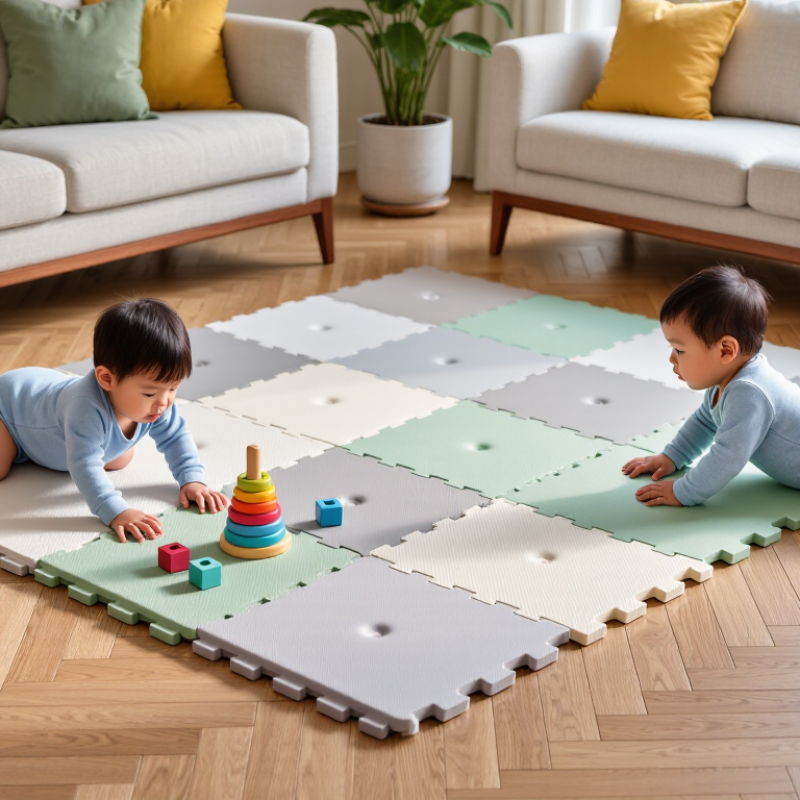
A play mat suitable for global buyers must work across different homes, climates, and safety expectations. During product evaluations, I check material transparency before judging colors or patterns. Buyers should find the foam type, thickness, surface finish, and cleaning instructions clearly stated. A low-odor, non-toxic material is important for rooms where children crawl, sit, and play daily.
Safety documentation also deserves careful attention. Reliable suppliers can provide recent test reports for physical, chemical, and flammability requirements. Standards differ between markets, so one certificate may not satisfy every destination. Ask which laboratory performed the testing and whether the report matches the current product. Small details matter. A vague claim is not enough.
Practical design affects international usability too. A waterproof surface helps in humid climates and after spilled drinks. Interlocking edges should stay flat on tile, wood, or carpet. Not every surface works. Buyers also need accurate dimensions, package weight, carton strength, and replacement-piece information. These details reduce shipping damage and installation confusion. I have seen attractive mats fail because their printed measurements ignored edge overlap. That mistake is easy to prevent. Clear multilingual instructions, recyclable packaging, and responsive after-sales communication further support buyers in different regions. A softer mat may feel comfortable, but excessive softness can reduce stability for toddlers learning to stand. This trade-off deserves honest explanation.
| Play Mat Type | Typical Material | Common Thickness | Typical Size Options | Key Advantages | Important Limitations | Best For | Global-Buyer Suitability |
|---|---|---|---|---|---|---|---|
| Foldable XPE Foam Mat | Cross-linked polyethylene foam with a wipe-clean surface | 10–20 mm | 150 × 200 cm to 200 × 300 cm | Lightweight, water-resistant, easy to fold, comfortable for crawling and floor play, and economical to ship when folded | Fold lines may become visible; printed surfaces can wear with heavy use; must be kept away from sharp objects | Traveling families, nurseries, and compact homes | Strong portability and broad international usability |
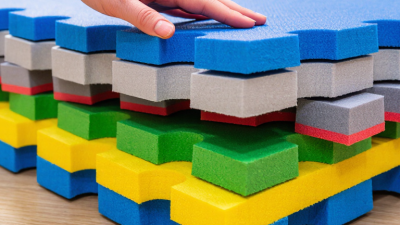
| Interlocking EVA Foam Tiles | Ethylene-vinyl acetate foam puzzle tiles | 10–25 mm | 30 × 30 cm or 60 × 60 cm tiles; expandable layouts | Modular, easy to replace or expand, cushioned, and suitable for irregular room layouts | Edges can separate during active play; textured surfaces may collect dust; some tiles have a noticeable odor when new | Playrooms, activity areas, and budget-conscious buyers | Flexible sizing and relatively efficient packaging |
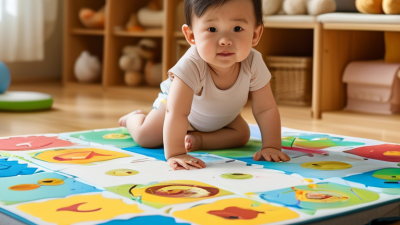
| Reversible Printed Foam Mat | Closed-cell foam, commonly XPE or EVA, with printed designs on both sides | 10–15 mm | 180 × 120 cm to 200 × 300 cm | Two visual designs, soft cushioning, waterproof cleaning, and strong appeal for early-learning themes | Ink and surface films may fade or scratch; quality varies according to print adhesion and edge finishing | Infants, toddlers, and educational play areas | Good product appeal, but surface durability should be checked |
| Quilted Cotton or Polyester Mat | Textile cover with cotton or polyester filling | 10–30 mm | 100 × 100 cm to 200 × 200 cm | Soft hand feel, attractive home appearance, foldable construction, and suitable for supervised infant activities | May absorb moisture, require regular washing, take longer to dry, and provide less impact protection than dense foam | Indoor infant use and design-focused homes | Comfortable, but less suitable for humid climates without washable construction |
| TPU-Coated Foam Mat | Foam core with a thermoplastic polyurethane protective layer | 10–20 mm | 120 × 180 cm to 200 × 300 cm | Water-resistant, smooth, durable, easy to clean, and generally more resistant to surface cracking than low-grade coated materials | Usually costs more; surface can feel less textile-like; quality depends on coating thickness and seam construction | Premium homes, childcare settings, and frequent cleaning | Good balance of hygiene, durability, and climate adaptability |
| PVC-Free Rubber or Natural Rubber Mat | Natural rubber or synthetic rubber, depending on the construction | 8–20 mm | 120 × 180 cm to 200 × 300 cm | Strong grip, stable placement, and good resistance to sliding during active play | May have a noticeable rubber odor; can be heavier; natural rubber may be unsuitable for people with latex sensitivity | Active play, exercise areas, and smooth floors | Stable and durable, but shipping weight and material sensitivity matter |
| Waterproof PVC Play Mat | Flexible PVC sheet, often with a foam or printed backing | 2–10 mm | 120 × 180 cm to 200 × 300 cm | Water-resistant, easy to wipe, widely available, and often lower in purchase cost | Thin versions provide limited cushioning; surface may become slippery; buyers should verify applicable chemical-safety requirements | Messy activities, feeding areas, and temporary protection | Practical for cleaning, with compliance verification required |
Buyer checklist: For international purchasing, confirm product dimensions, packed dimensions, gross weight, waterproof performance, cleaning instructions, odor information, slip resistance, age suitability, and compliance with the regulations of the destination market.