How to Choose the Best ABC Mat in 2026?
Choosing the best Abc Mat in 2026 requires more than comparing colors, prices, or thicknesses. A mat may look sturdy in a product photo, yet feel unstable under a child’s knee. Surface grip, impact absorption, odor, storage space, and cleaning needs deserve equal attention. The best choice depends on the activity, user weight, floor type, and available room.
The World Health Organization’s Global Status Report on Physical Activity 2022 estimated that 27.5% of adults were insufficiently active worldwide. It also reported that more than four in five adolescents lacked enough physical activity. These findings reinforce the value of safe, approachable home exercise spaces. However, a mat cannot solve poor technique or unsafe supervision. That point is easy to overlook.
Ergonomics expert Dr. Karen Jacobs offers a useful principle: “Ergonomics is fitting the task to the person, not the person to the task.” Apply it when evaluating an Abc Mat. Check whether its firmness supports balance without feeling harsh. Test whether its edges remain flat after repeated folding. Look for clear material information, reliable care instructions, and evidence of relevant safety testing. ASTM standards can provide useful benchmarks, but certification claims still need verification.
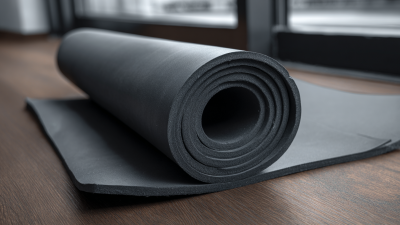
Some advice remains imperfect. A thicker mat is not automatically safer. Soft foam can reduce comfort during standing exercises, while firm surfaces may increase pressure on knees and wrists. Measure the floor before ordering. Consider ventilation, because new materials can smell strongly in a small room. In 2026, the smartest buyer will judge performance through evidence, fit, and daily usability—not marketing language alone.
Define Your ABC Mat’s Use, Age Range, and ASTM F963-23 Safety Needs
How to Choose the Best ABC Mat in 2026?
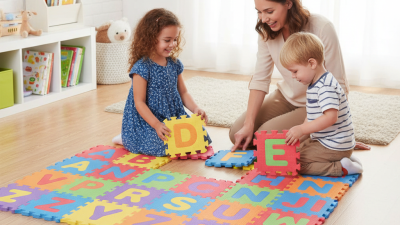
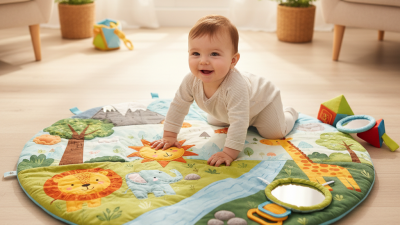
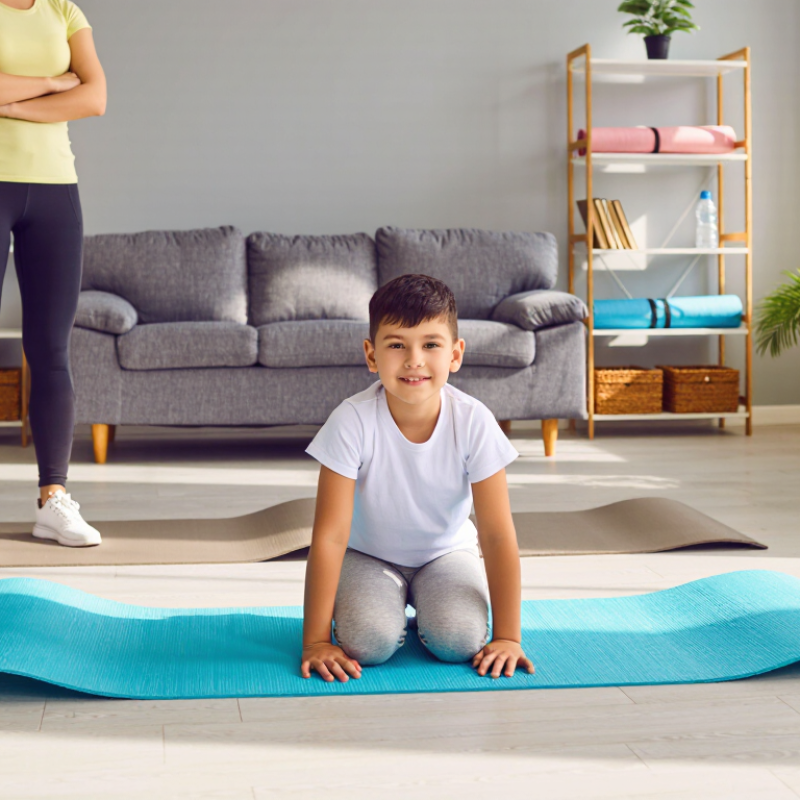
Define the mat’s main use before comparing colors or patterns. A nursery mat needs a soft, washable surface for tummy time. A playroom mat needs firm cushioning for crawling, sitting, and early movement. Classroom use may require thicker edges and easier cleaning. Measure the floor first. Some interlocking mats leave gaps near walls. Those gaps collect crumbs and moisture.
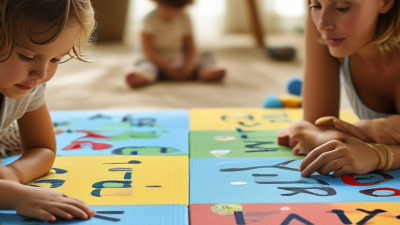
Age range changes the safety decision. For babies, choose a smooth surface without detachable letters or small pieces. For children under three, inspect every tile and printed layer carefully. Loose parts can create choking risks. Older children may use raised letters for learning, but they still need stable flooring. Watch for slippery surfaces after cleaning. A mat can look safe and still move during active play.
ASTM F963-23 is an important reference for toys sold in the United States. Ask the seller for recent, item-specific test documentation. Check whether it covers the complete mat, inks, coatings, and detachable parts. The standard may address hazards such as heavy elements, phthalates, and certain mechanical risks. It does not replace every applicable legal requirement.
Testing paperwork is useful, but it is not a substitute for inspection. Smell is not proof of toxicity, either. My practical mistake would be trusting attractive packaging too quickly. Recheck seams, edges, and labels after regular use. Safety needs attention beyond the purchase date.
Screen EVA, TPE, and PVC Materials Against REACH’s 0.1% Phthalate Limit
How to Choose the Best ABC Mat in 2026?
Material choice matters when checking an ABC mat against REACH. EVA and TPE are often selected because they can be made without phthalate plasticisers. PVC needs closer review. It commonly uses plasticisers, although PVC itself is not automatically unsafe. Under REACH Annex XVII, DEHP, DBP, BBP, and DIBP must remain below 0.1% by weight of plasticised material when the relevant consumer-article rules apply. That equals 1,000 mg/kg.
Look beyond a supplier’s “non-toxic” claim. Ask for a recent laboratory report covering the finished mat, not only raw pellets. An ISO/IEC 17025-accredited laboratory should test representative samples, including printed surfaces, joining areas, and softer sections. ECHA enforcement projects have repeatedly found restricted substances in consumer products sold online, showing why paperwork alone can be weak evidence. A certificate can also cover an older production batch.
Check the test method, sample date, and four named phthalates. The report should identify the tested material and detection limits. Additional screening can examine other restricted substances under current REACH updates. One practical weakness remains: a single sample cannot represent every batch. Therefore, compare incoming inspections with supplier declarations and retest after formulation changes.
The cheapest mat may pass visually. That proves very little.
Compare Mat Size, Cushioning, and Slip Resistance for Everyday Play
How to Choose the Best ABC Mat in 2026?
Size should match the child’s real play pattern, not only the room’s empty space. Measure the active area around furniture, shelves, and doorways. A mat should let children roll, crawl, and build without quickly reaching bare flooring. The World Health Organization recommends at least 180 minutes of varied physical activity daily for children aged three to four. A cramped mat can quietly limit that movement. I prefer overlapping play zones when one large mat cannot fit safely.
Cushioning needs balance. I once favored the thickest mat, believing more padding always meant better protection. It felt comfortable, but standing and turning became less stable. Compare thickness, firmness, and edge compression together. Kneel on the surface, press it with your palm, and watch whether it quickly recovers. Very soft foam may reduce confidence during early walking. Very firm material can feel harsh during frequent floor play. The right choice depends on age, flooring, and activity.
Slip resistance deserves direct testing. Look for documented dry and wet slip testing, not vague claims such as “secure grip.” The Consumer Product Safety Commission repeatedly highlights falls as a major source of childhood injury reports. A mat cannot replace supervision, especially near water or polished floors. Check whether corners curl after storage. Check the underside after cleaning. One weakness remains easy to miss: attractive letters may hide poor edge stability. A practical trial on your own floor is often more revealing than a product photograph.
How to Choose the Best ABC Mat in 2026? - Compare Mat Size, Cushioning, and Slip Resistance for Everyday Play
Comparison criteria focus on everyday indoor play, including crawling, tummy time, early walking, and floor-based activities.
| Mat Type |
Typical Size |
Thickness |
Cushioning Level |
Surface Material |
Slip Resistance |
Best For |
Main Consideration |
| Compact Foldable Mat |
120 × 180 cm |
10 mm |
Moderate |
Closed-cell foam with wipe-clean film |
Good on dry floors |
Small rooms and travel |
Limited coverage for active play |
| Standard Interlocking Mat |
180 × 180 cm |
12 mm |
Good |
Textured EVA foam |
Good on dry, level floors |
Everyday crawling and floor play |
Edges may separate if poorly aligned |
| Large Reversible Mat |
200 × 280 cm |
15 mm |
Very good |
Water-resistant PU-coated foam |
Very good on dry floors |
Families needing broad coverage |
Requires more storage space |
| Extra-Thick Soft Mat |
180 × 200 cm |
20 mm |
Excellent |
High-density foam with textured cover |
Very good when fully flat |
Tummy time and gentle movement |
May feel less stable for standing practice |
| Water-Resistant Roll-Up Mat |
150 × 200 cm |
8 mm |
Basic |
PVC-free waterproof foam surface |
Good on dry floors; lower when wet |
Messy sensory play and quick cleanup |
Thinner protection from hard floors |
| Premium Multi-Layer Mat |
200 × 300 cm |
15 mm |
Very good |
Layered foam with sealed waterproof coating |
Excellent on dry, level floors |
Multiple children and larger play areas |
Higher weight and purchase cost |
Selection note:
For everyday play, choose a mat at least 12 mm thick, large enough for the child to move freely, and textured enough to remain stable on a clean, dry, level floor. No play mat should be treated as a substitute for active supervision. Keep the surface dry and inspect seams, edges, and coating regularly.