Choosing among China’s top Floor Mat manufacturers requires more than comparing factory photos and low prices. Buyers need evidence behind every promise. Material quality, backing strength, edge finishing, production capacity, and inspection procedures can change the real value of an order. A mat may look excellent under showroom lighting, yet curl after repeated washing or slide across a polished entrance floor.
Floor Mat sourcing consultant Michael Chen says, “The best factory is not always the largest; it is the one that proves consistency.” This practical view matters when buyers compare Chinese suppliers. A dependable manufacturer should provide recent samples, clear material specifications, realistic lead times, and documented quality checks. Buyers should also examine rubber density, absorption performance, odor control, color stability, and resistance to daily foot traffic. Ask difficult questions. Vague answers are warning signs.
Factory visits, video inspections, and third-party testing can reveal details that catalogues hide. Look at cutting waste, stitching tension, warehouse conditions, and finished goods packaging. Export experience also matters, especially when custom sizes or private labels are required. Certifications can support confidence, but they should match the actual product and current production site. Paper alone is not enough.
There is no perfect supplier.
I have learned that the cheapest quotation can become expensive after rework, delays, or customer complaints. Still, a high price does not automatically prove superior quality. This comparison should therefore focus on repeatable performance, transparent communication, and after-sales responsibility. The right Chinese manufacturer is the one that fits the buyer’s market, application, and quality expectations—not merely the one with the most impressive website.
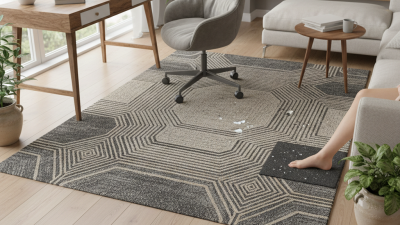
Floor mats are protective surfaces placed at entrances, kitchens, offices, and vehicles. They remove dirt, absorb moisture, and reduce slipping risks. In a busy entrance, a mat can collect muddy water before it reaches polished flooring. Common materials include rubber, nylon, polyester, and natural fiber. Each material behaves differently under sunlight, pressure, and repeated washing. A useful mat must match the location, traffic level, cleaning routine, and floor type.
Manufacturer selection matters because appearance does not prove performance. Experienced manufacturers should explain fiber density, backing thickness, edge construction, and drainage design clearly. Buyers should request samples and test them in realistic conditions. Check whether the mat curls after washing, releases color, or moves on smooth tiles.
I once trusted a neat-looking sample without checking its backing. It shifted near a wet doorway. That small mistake caused extra cleaning and replacement work.
Reliable manufacturers maintain consistent production standards and inspect each batch. They should provide material details, dimensional tolerances, care instructions, and relevant safety test information. Factory communication also matters. Clear answers often reveal practical experience. If a supplier admits a material limitation, that can be more trustworthy than exaggerated promises. Buyers should review packaging, labeling, sample records, and production capacity before placing large orders. A low price may hide weak edges, unstable backing, or inconsistent sizing. These issues are easy to overlook during a quick quotation review.
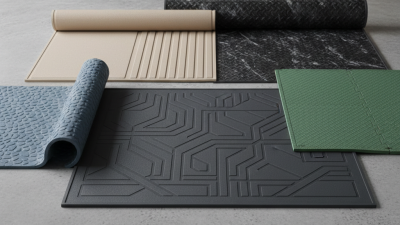
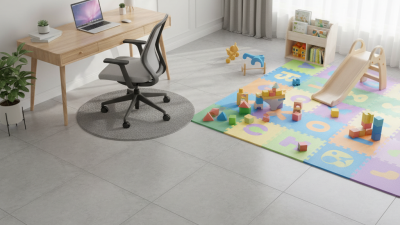
Chinese manufacturers produce floor mats for homes, offices, vehicles, hotels, and industrial entrances. PVC coil mats are common because their open structure traps dirt and lets water drain. Rubber mats offer strong grip near doors, kitchens, and workshops. TPE mats feel cleaner and more flexible, while microfiber and chenille mats absorb moisture in bathrooms or bedrooms.
Some factories also make anti-fatigue mats with cushioned foam layers. Others produce printed entrance mats, logo mats, carpet mats, and interlocking tiles. Buyers can request different thicknesses, edge designs, backing materials, and surface textures. A mat may look attractive in a catalog but perform poorly on wet stone. That difference matters.
Tips: Ask for physical samples, not only photos. Check odor, curling, colorfastness, drainage, and edge bonding. Place the sample on your actual floor for several days. Measure drying time after spraying water. Confirm production tolerances and packaging details in writing. A supplier may provide a perfect sample, yet bulk goods can vary slightly. This is easy to overlook. Reflect on cleaning labor, replacement costs, and local weather before choosing the cheapest option.
China Top Floor Mat Manufacturers: Which Should Buyers Choose?
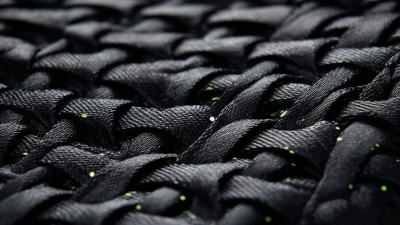
Evaluating a Chinese floor mat manufacturer requires more than checking a product photo. In factory audits, I inspect edge finishing, backing grip, and dimensional stability after heat exposure. TPE, rubber, PVC, and nylon each perform differently. TPE mats usually resist moisture well, while rubber often provides stronger traction. However, material claims need laboratory evidence. Grand View Research reported that the global floor coverings market exceeded USD 400 billion in 2023, showing intense competition and wide quality differences. A low price can hide thinner layers, recycled fillers, or weak bonding.
Ask for test reports covering abrasion, slip resistance, odor, and temperature cycling. ASTM methods can support abrasion and flammability evaluations, while ISO 9001 certification indicates controlled production processes, not perfect products. The 2024 Freedonia industry analysis also identified resilient flooring as a growing category, increasing pressure for durable and lower-maintenance surfaces. Buyers should review batch records, incoming-material inspections, and corrective-action reports. These documents reveal more than polished samples.
Tips: Request three production samples from separate batches. Measure thickness with a caliper. Leave one mat in a warm vehicle for 48 hours. Check curling, smell, color change, and backing adhesion. Ask whether testing was performed on the finished mat, not only on raw material. ISO 14001 can support environmental management, but it does not replace product testing. I would not trust a certificate alone. Even experienced buyers sometimes overlook stitching quality and packaging compression. That mistake is easy to repeat.
| Evaluation Dimension | What Buyers Should Check | Common Materials or Technologies | Relevant Quality Indicators or Standards | Practical Buyer Benchmark | Priority |
|---|---|---|---|---|---|
| Material Composition | Confirm the exact fiber, backing, coating, and recycled-content percentages. Request a material specification sheet rather than relying only on product descriptions. | Polypropylene, polyester, nylon, PVC, natural rubber, nitrile rubber, thermoplastic elastomer, and cotton or coconut fiber. | Material declaration, technical data sheet, recycled-content documentation where applicable, and consistency between samples and mass production. | The composition, backing type, and weight should be clearly documented and remain consistent across production batches. | High |
| Surface Durability | Assess resistance to abrasion, matting, pilling, color change, and deformation under repeated foot traffic. | Solution-dyed fibers, tightly tufted or woven constructions, heat-set yarns, and reinforced surface structures. | Martindale abrasion testing, Wyzenbeek abrasion testing, colorfastness testing, and visual inspection after simulated use. | The manufacturer should provide a documented test method, test conditions, and results rather than an unsupported “high durability” claim. | High |
| Absorbency and Dirt Removal | Evaluate how effectively the mat captures water, dust, grit, and mud, and how quickly it dries after use. | Needle-punched polypropylene, polyester pile, microfiber, ribbed constructions, and multi-zone entrance mat designs. | Water absorption capacity, drying-time testing, dirt-retention evaluation, and performance testing under wet and dry conditions. | For entrance use, select a construction that combines scraping fibers with absorbent fibers instead of relying on appearance alone. | High |
| Backing and Slip Resistance | Check whether the backing remains flat, bonds securely to the face material, and provides stable contact with the intended floor surface. | PVC, natural rubber, nitrile rubber, thermoplastic rubber, and thermoplastic elastomer backings. | Slip-resistance testing appropriate to the target market, dimensional stability, curl resistance, backing adhesion, and floor-compatibility checks. | The supplier should identify suitable floor types and warn against surfaces where migration, staining, or slipping may occur. | High |
| Dimensional Stability | Verify finished length, width, thickness, squareness, edge straightness, and resistance to shrinkage or curling. | Stable backing compounds, heat-setting, edge binding, precision cutting, and controlled curing processes. | Pre-production and post-conditioning dimensional measurements, thickness tolerance, flatness inspection, and sample-to-order comparison. | Use an agreed inspection tolerance for length, width, thickness, and weight, recorded in the purchase specification. | High |
| Colorfastness | Test resistance to fading, bleeding, crocking, washing, water exposure, and cleaning chemicals relevant to the application. | Solution-dyed polypropylene or acrylic fibers, pigment printing, piece dyeing, and color-matched yarn systems. | ISO 105 series or equivalent colorfastness methods, including rubbing, water, washing, and light exposure where relevant. | Color requirements should be approved with a physical sample or standardized color reference, not only a screen image. | Medium |
| Flammability Performance | Determine whether the finished mat is suitable for residential, commercial, hospitality, transport, or other regulated environments. | Flame-retardant fibers, treated backing materials, low-flammability constructions, and tested composite assemblies. | Applicable local fire regulations and recognized test methods such as ASTM, EN, or other standards specified for the destination market. | Fire performance must be verified on the complete finished mat, because the face, backing, adhesive, and edge treatment can affect results. | High |
| Chemical and Odor Control | Check for residual solvents, plasticizers, formaldehyde, heavy metals, restricted substances, and strong odors after unpacking. | Low-VOC materials, compliant dyes, controlled adhesives, phthalate-free PVC options, and low-odor rubber compounds. | Restricted Substances List testing, VOC or emissions testing where required, and applicable chemical compliance documentation. | Request recent third-party reports for the finished product and confirm that the report matches the exact material and construction. | High |
| Manufacturing Process Control | Review incoming-material inspection, process controls, equipment maintenance, batch traceability, and final inspection procedures. | Computerized tufting or weaving, automated cutting, heat-setting, edge binding, rubber coating, lamination, and barcode traceability. | ISO 9001-based quality management, documented work instructions, inspection records, corrective-action procedures, and batch identification. | A reliable manufacturer should be able to trace a finished batch back to raw materials, production dates, operators, and inspection records. | High |
| Factory Capacity and Consistency | Compare actual production capacity with the required order volume, peak-season planning, minimum order quantity, and repeat-order capability. | Dedicated production lines, standardized tooling, controlled raw-material purchasing, and documented capacity planning. | Capacity records, production schedules, sample approval procedures, on-time delivery history, and repeat-order quality data. | Select a supplier that can maintain the approved sample’s color, dimensions, weight, and construction throughout the planned order volume. | High |
| Customization Capability | Evaluate custom sizes, shapes, logos, colors, edge finishing, packaging, and private-label requirements without weakening product quality. | Digital printing, jacquard weaving, custom die cutting, laser cutting, overlock binding, molded edges, and custom packaging. | Artwork approval process, color approval, pre-production sample, logo placement tolerance, and documented change-control procedure. | Approve a pre-production sample that reflects the final materials, printing method, edging, packaging, and labeling. | Medium |
| Environmental Management | Check energy use, wastewater handling, scrap management, recycled-material controls, and the manufacturer’s environmental documentation. | Recycled PET or polypropylene, recyclable thermoplastic backings, water-based processes, and closed-loop material recovery. | ISO 14001-based environmental management, recycled-content verification, waste records, and destination-market sustainability requirements. | Sustainability claims should identify the material source, percentage, verification method, and whether the claim applies to the whole product. | Medium |
| Packaging and Export Readiness | Review protection against moisture, compression, contamination, deformation, and damage during international transportation. | Poly bags, cartons, palletized loading, moisture barriers, compression packing, corner protection, and export labels. | Packaging specification, carton-drop testing where appropriate, moisture-control procedures, shipping marks, and accurate product labeling. | Packaging should preserve the mat’s flatness, cleanliness, dimensions, and identification through the expected transport and storage period. | Medium |
| Inspection and Sampling | Establish inspection stages for raw materials, first-piece production, in-process goods, finished goods, and pre-shipment loading. | Digital weighing, thickness gauges, color standards, visual inspection boards, barcode systems, and laboratory testing. | Pre-production inspection, during-production inspection, final random inspection, agreed sampling plans, and defect classification. | Define critical, major, and minor defects before production and record the acceptance criteria in the purchase contract. | High |
| Documentation and Compliance | Confirm that specifications, test reports, declarations, certificates, packing lists, invoices, and labels are complete and consistent. | Product data sheets, safety data where applicable, test reports, certificates of origin, compliance declarations, and inspection reports. | Destination-market product regulations, chemical restrictions, labeling rules, customs requirements, and buyer-specific compliance standards. | Documentation should be current, product-specific, issued by a credible organization, and traceable to the supplied production batch. | High |
| After-Sales Support | Assess response time, complaint handling, replacement policy, root-cause analysis, and support for repeat orders or quality claims. | Customer service procedures, corrective and preventive action systems, spare stock, replacement programs, and technical support. | Written warranty terms, complaint-response targets, corrective-action reports, and documented responsibility for nonconforming goods. | Choose a supplier that provides a written quality agreement and a clear process for handling defects, claims, and corrective actions. | Medium |
Choosing a top floor mat manufacturer starts with a comparable price, not the lowest quotation. Ask for a clear breakdown of material, backing, printing, packaging, and delivery costs. A low factory price may hide expensive tooling or weak packaging. Compare the landed cost for the same size, thickness, and order quantity. Request a written quotation with its validity period.
Customization needs practical checking. Confirm available colors, edge shapes, logos, surface textures, and backing materials. Ask whether custom samples require a fee and how long approval takes. A reliable manufacturer should explain color limits and production tolerances clearly. I once focused on a perfect sample and overlooked slight size variation in bulk production. That mistake taught me to request a signed sample standard.
Minimum order quantities can change the real budget. Compare MOQ levels for stock designs, custom colors, and printed patterns. Some factories accept small trial orders but charge more per piece. Others offer better pricing at higher quantities, yet unused inventory can become costly. Ask about mixed sizes, reorder quantities, and quantity-based price breaks. Check whether the MOQ applies per design or to the entire purchase. Keep records of responses. Verbal promises can fade. A short trial order may reveal packing damage, color consistency, and delivery reliability before a larger commitment.
Indicative industry benchmarks for buyers comparing standard, semi-custom, and fully custom production.
Standard products generally offer the lowest price and minimum order quantity, while fully custom mats require higher order volumes and longer production planning. The price index uses standard products as the baseline, and customization is scored from 1 to 5.
Choosing among China’s top floor mat manufacturers requires more than comparing prices. Buyers should verify the factory behind the quotation, not only the trading company’s presentation.
Request a complete company profile, business license, production address, and recent factory video. Check whether the address matches official records and shipping documents. Ask who controls material purchasing, cutting, printing, stitching, and final inspection. A serious manufacturer can explain each step clearly. Vague answers deserve caution.
Order samples before placing a large order. Check thickness, edge binding, backing grip, odor, color consistency, and packaging strength. Place the sample on a real vehicle floor or entrance area. Test it after several days of use. Small defects often appear later. Ask for material specifications and relevant laboratory reports, then verify the report issuer independently. Do not accept edited screenshots as proof.
A factory audit can reveal storage conditions, worker organization, and inspection routines. Buyers should also review production capacity, lead times, replacement policies, and communication speed. Request photos of completed bulk goods before shipment. It helps, but it is not perfect. Photos may hide uneven stitching or surface marks. A third-party pre-shipment inspection offers stronger control.
The lowest quotation may reflect thinner material, weaker backing, or rushed quality checks. Compare total cost, including packaging, inspection, shipping, and possible rework. A reliable manufacturer answers difficult questions without pressure. That matters. Suppliers should also accept reasonable changes after sample evaluation. Choosing the right partner is a practical process of checking evidence, testing products, and noticing what remains unclear.