Best Foam Gym Floor Mats for Home and Commercial Use?
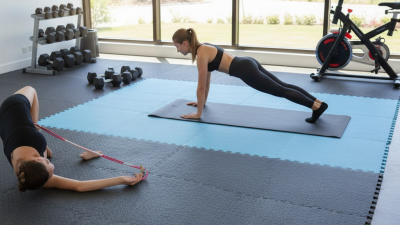
In recent years, the demand for Foam Gym Floor Mats has surged, catering to both home and commercial fitness environments. According to a report by IBISWorld, the gym mat market is projected to reach $2 billion by 2025, highlighting significant growth in this sector. These mats offer critical support for various fitness activities, ensuring user safety and comfort.
Expert in sports flooring, Dr. Emily Thompson, notes, “The right mat can significantly enhance performance and reduce injury risk.” This underscores the importance of selecting high-quality Foam Gym Floor Mats. With varying thickness, density, and material composition, choosing the right mat can be overwhelming. Not all mats are created equal; some may not provide adequate cushioning or durability for intensive workouts.
It’s essential to consider factors like mat size, grip, and ease of cleaning. While many gyms opt for high-end mats, homeowners often seek affordability without sacrificing quality. Striking this balance can be challenging but is crucial for achieving optimal performance and safety in any workout space.
Types of Foam Gym Floor Mats for Various Exercises
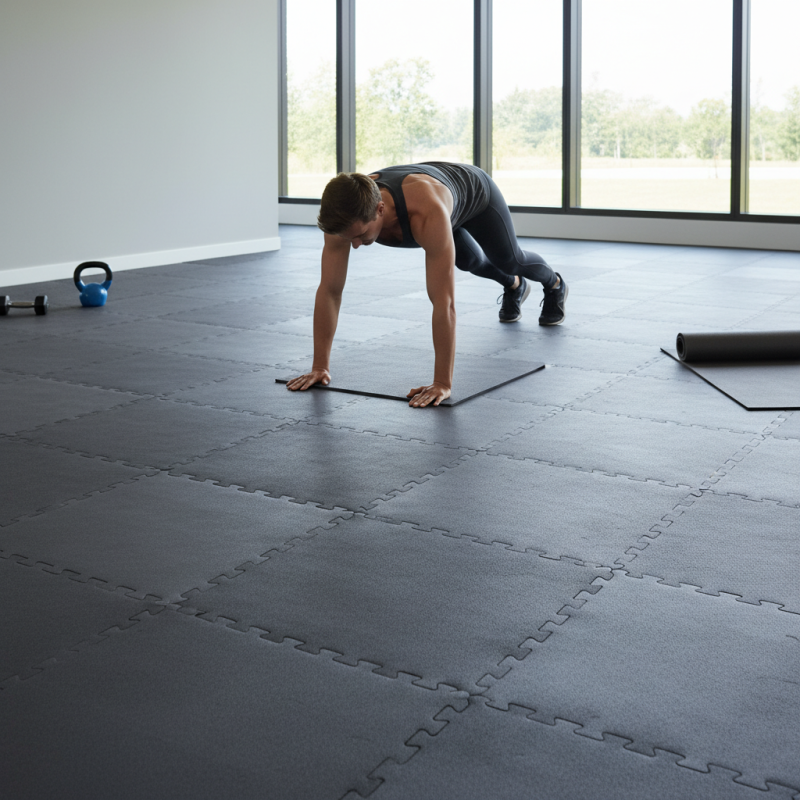
When choosing foam gym floor mats, it's essential to consider the type of exercise you will be doing. Different activities require different types of mats for optimal performance and safety. For instance, high-impact exercises like aerobics or kickboxing benefit from thicker, dense mats. A report by the American Council on Exercise notes that proper flooring can reduce injury risks by up to 30%. This fact emphasizes the importance of selecting mats that absorb shock effectively.
For yoga or pilates, softer foam mats are preferable. They provide grip and cushioning without being too thick. Research shows that softer materials promote better balance and stability. In group exercises, interlocking foam tiles can be ideal. They offer versatility as they can be easily rearranged based on the space available.
Despite these advantages, not all mats perform equally. Some may flatten over time or lose their shape, necessitating a review of your choices. It’s crucial to pay attention to mat durability and density ratings. Balancing comfort, stability, and longevity requires a thoughtful approach. Each gym's needs can be unique, demanding a tailored selection process.
Key Features to Consider When Choosing Foam Gym Mats
When choosing foam gym mats, several key features deserve attention. One important aspect is thickness. Thicker mats provide better cushioning and support. This is especially crucial for high-impact workouts. A thickness of at least 0.5 inches is often recommended. However, thicker mats can be heavier and more challenging to move around.
Another vital feature is material. High-density foam typically offers more durability. It withstands wear and tear from various fitness activities. Some mats have a non-slip surface, which enhances safety during workouts. This feature is beneficial for both home users and commercial gyms. Yet, some foam mats can develop an unpleasant odor over time, which may require regular cleaning.
Size options are also essential. Larger mats cover more floor space but may not fit all areas. A smaller mat might be easier to store but may not provide enough space for workouts. It's important to measure the area before purchasing. Users often overlook proper measurements, leading to less-than-ideal setups.
Balancing size, thickness, and material is crucial for making an effective choice.
Benefits of Using Foam Floor Mats for Home Gyms
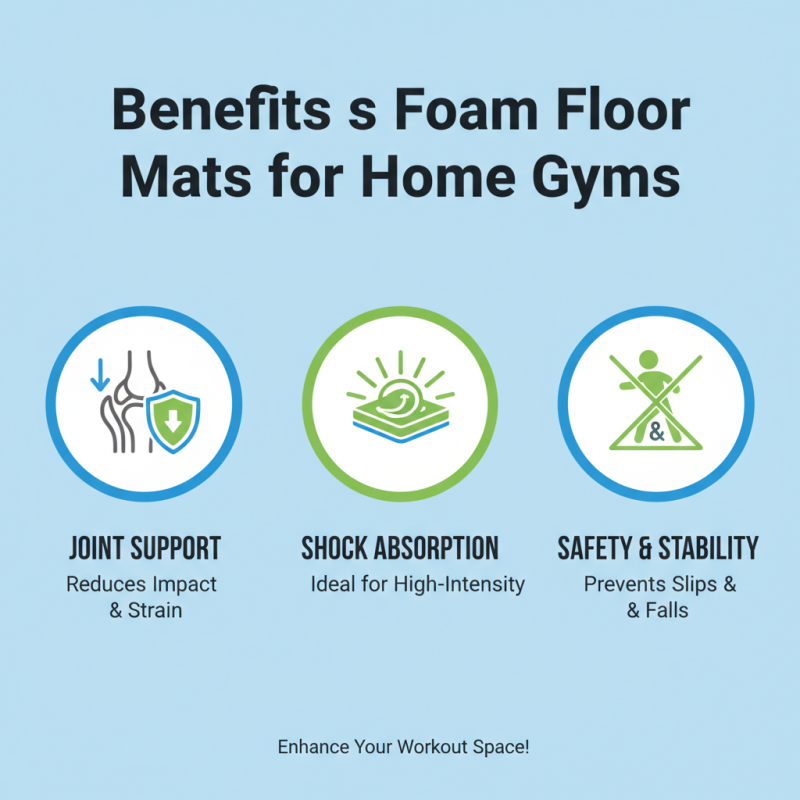
Foam floor mats have become essential for home gyms. They offer several benefits that enhance workout experiences. These mats provide cushioning and support, reducing the impact on joints during exercises. Their ability to absorb shock makes them ideal for high-intensity workouts. Foam mats create a safe environment, helping to prevent slips and falls.
When choosing foam mats, the thickness matters. Thicker mats offer more cushioning but can feel unstable for certain activities. Consider the types of workouts you do. If you focus on cardio, a thinner mat might suffice. However, for strength training, thicker options may be preferable. Texture also plays a role in grip and stability.
Tips: Regularly check for wear and tear on your mats. A worn mat can become slippery and unsafe. Also, clean mats frequently to maintain hygiene. This practice can prevent odor and prolong the life of your equipment. Don't shy away from experimenting with different materials and styles. You might discover what works best through trial and reflection.
Comparison of Foam Mats for Commercial vs. Home Use
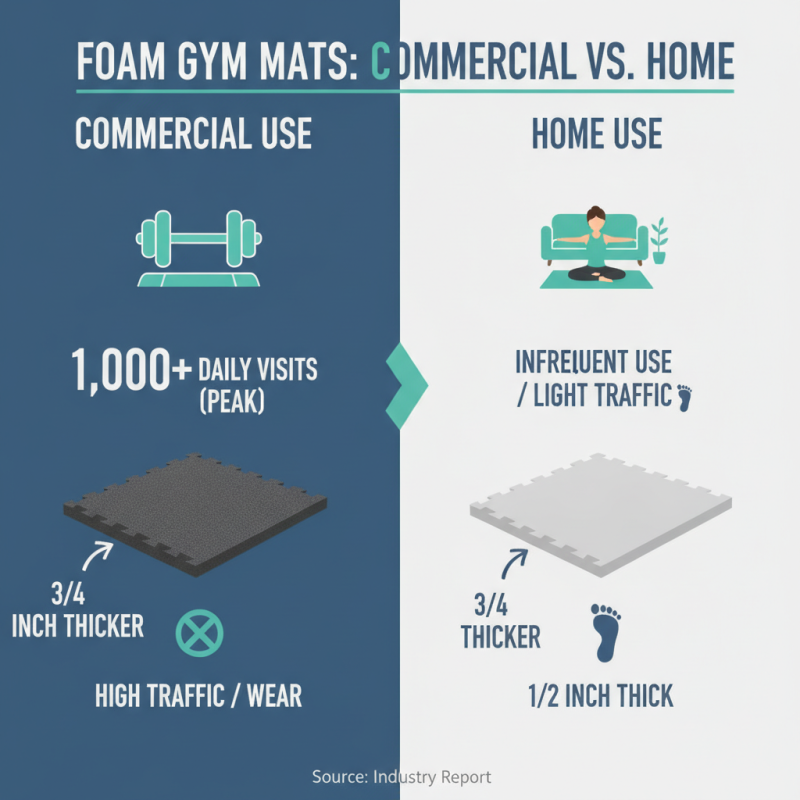
When comparing foam gym floor mats for commercial versus home use, it's crucial to assess their unique demands. Commercial settings often experience high foot traffic. According to a recent industry report, commercial gyms see an average of 1,000 visits per day during peak hours. This leads to increased wear and tear on flooring materials. A thicker foam mat, generally around 3/4 inch, may be necessary to withstand this intensity.
On the other hand, home gyms typically cater to fewer users, often a family or individual. Surprisingly, many home users overlook essential features such as slip resistance and shock absorption. Studies indicate that 25% of home gym users reported injuries due to inadequate floor protection. Mats for home use can range from 1/2 inch to 1 inch thick. The choice often depends on the types of workouts planned, such as yoga or high-intensity training.
Accessibility and maintenance are also significant factors. Commercial mats tend to be made from more durable materials, making them easier to clean and maintain. However, they may require more investment upfront. Home users might prefer lighter, less costly options that do not compromise safety. Ultimately, evaluating how much wear each mat must endure can guide the decision-making process effectively.
Maintenance and Care Tips for Foam Gym Floor Mats
When it comes to maintaining foam gym floor mats, a few essential practices can enhance durability. Regular cleaning is crucial. Use a mild detergent mixed with water for routine maintenance. A report by the National Association of Floor Covering Technicians highlights that improper cleaning techniques can lead to quicker deterioration. Avoid harsh chemicals, as they can degrade the foam’s texture and integrity.
Additionally, routine inspection for wear and tear is vital. Foam mats can develop indentations or scuffs over time. A study from the International Health, Racquet & Sportsclub Association suggest that replacing mats showing significant wear can prevent accidents and injuries. Even small tears can lead to larger issues if ignored.
Lastly, consider the environment where the mats are used. Excessive moisture and high traffic can impact their lifespan. Maintaining a dry area reduces mildew growth, while using entry mats can minimize dirt and debris. Overlooking these factors can lead to unforeseen replacements, costing more in the long run. A proactive approach is always better than reactive measures.
Best Foam Gym Floor Mats for Home and Commercial Use
| Mat Type |
Thickness (inches) |
Size (ft) |
Weight (lbs) |
Water Resistance |
Maintenance Tips |
| Interlocking Tiles |
0.5 |
2 x 2 |
1.5 |
Yes |
Sweep and mop regularly |
| Roll-Out Mats |
1.0 |
10 x 6 |
15 |
No |
Wipe down with a damp cloth |
| Foam Squares |
0.75 |
2 x 2 |
1.3 |
Yes |
Clean with mild detergent |
| Gym Tiles |
0.5 |
3 x 3 |
2.5 |
Yes |
Vacuum regularly |