20+ years of production experience
Leave Your Message

Top 10 Types of Rubber Floor Matting for Buyers?

Rubber Floor Matting can make a busy floor safer, cleaner, and more comfortable, but the right choice depends on where it will be used. A mat beside a wet sink faces different demands from one under a standing workstation or at a building entrance. Surface texture, thickness, drainage, and ease of cleaning all affect daily performance. Small details matter.

This guide introduces ten common types, including anti-fatigue mats, drainage mats, entrance mats, ribbed runners, and interlocking tiles. Each serves a different purpose. A kitchen worker may value cushioning and grip, while a warehouse buyer may need a durable runner that stays flat under foot traffic. Some mats have open holes that let water pass through; others use raised patterns to channel moisture away. Not every mat fits every floor.

Buyers should compare the intended setting, expected traffic, cleaning routine, and product specifications before choosing. Check dimensions carefully: a mat that leaves an exposed strip beside a workbench may not solve the problem. Also consider edges, odor, and how easily the surface can be moved for cleaning. These points are easy to overlook when price leads the decision. A lower upfront cost may not mean better value if the mat wears quickly or proves awkward to maintain. Still, product descriptions cannot predict every floor condition. Use them as a starting point, then match the mat to the real space and its everyday demands.
Top 10 Types of Rubber Floor Matting for Buyers?

What Rubber Floor Matting Is and How It Is Made

Rubber floor matting is a resilient sheet or molded surface made from natural rubber, synthetic rubber, recycled rubber, or a blend. Its feel depends on the recipe: a dense, smooth mat suits wheeled equipment, while a raised pattern can help grip wet footwear. Not every mat uses the same rubber or recycled content.

The International Rubber Study Group’s 2024 World Rubber Industry Outlook puts global natural-rubber production at roughly 15 million tonnes in 2023. That scale matters: flooring competes with many other uses for rubber, and material origin can vary by supplier. In production, ingredients are weighed and mixed with fillers, pigments, and processing aids. The compound is then milled into a workable sheet or shaped by extrusion or molding. Heat and pressure cure the rubber, setting its final form and resilience.

Small details matter. A raised coin pattern, for example, is formed in the mold; it is not simply painted on. Manufacturers may test thickness, hardness, tensile strength, and slip performance, but results depend on the method and sample. Ask for the product’s technical data sheet and test conditions. Recycled content can reduce reliance on new feedstock, yet it may also bring variation in color or odor. That trade-off deserves a closer look.
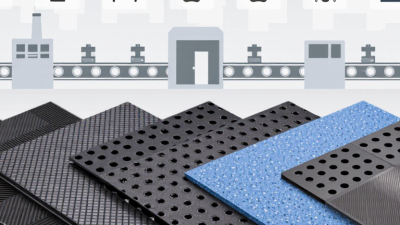
Top 10 Types of Rubber Floor Matting: Typical Thickness Ranges

Rubber mat thickness depends on the product and its intended use; the ranges shown are representative, not universal specifications. Mats are commonly made by mixing rubber with other ingredients, shaping the compound by processes such as molding or calendaring, and vulcanizing it to improve strength and elasticity.

Key Features That Distinguish Rubber Mat Types

Rubber floor mats vary in more than appearance. Coin-pattern mats provide raised, rounded grip and are easy to sweep, while ribbed and diamond-plate surfaces channel foot traffic in predictable directions. Smooth mats wipe clean quickly, but may feel slick when wet. Small details matter.

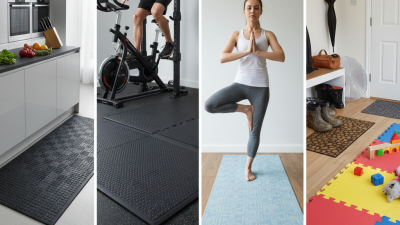
Drainage mats use holes or open grids to let water pass beneath the walking surface. They suit entrances and wash areas, though debris can collect underneath if cleaning is irregular. Anti-fatigue mats use a softer, thicker structure to reduce standing strain; their edges should sit flat to limit trip risks. Interlocking tiles are easy to replace in sections, while long runners cover narrow aisles with fewer seams. Studded mats add traction, and recycled-crumb mats often provide a firm, textured surface.

Check the material and backing, not just the pattern. Rubber compounds differ in resistance to water, oils, heat, and cleaning chemicals, so buyers should match product specifications to the actual setting. Thickness alone does not prove comfort or durability; density and support matter too. I’ve seen buyers focus on a bold tread and overlook the mat’s edges. That choice can disappoint. Compare cleaning needs, expected foot traffic, and floor compatibility before choosing.

Ten Common Types of Rubber Floor Matting

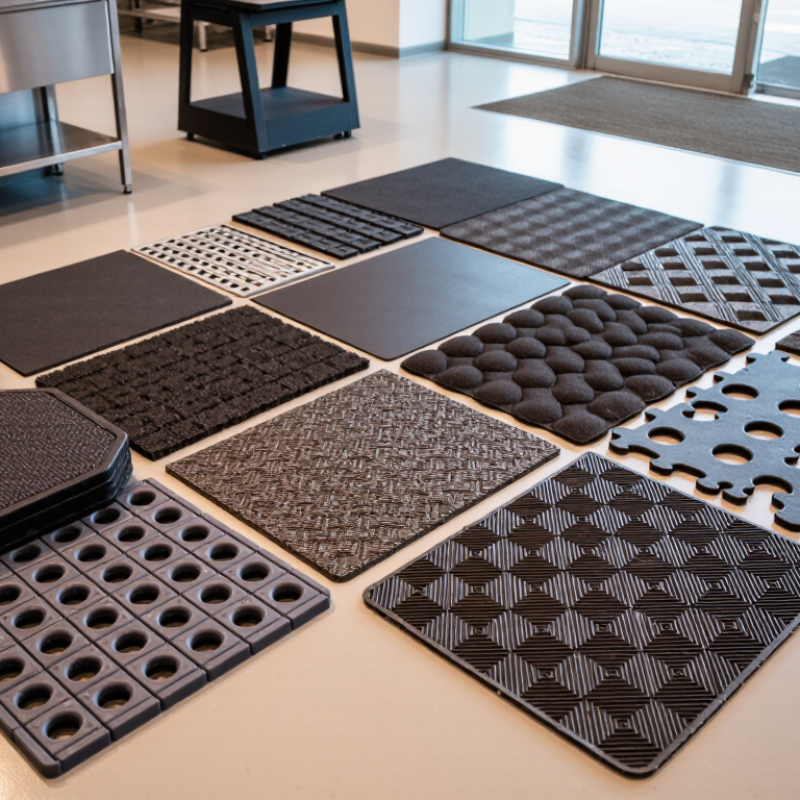
Rubber floor matting comes in several forms, and texture changes how it performs underfoot. Ribbed mats guide light spills toward edges, while coin mats add raised circular grip in busy walkways. Diamond-plate patterns suit work areas where boots track dust or moisture. Studded mats provide a more pronounced grip; smooth mats are easier to wipe clean but can become slippery when wet.

Fit matters. Drainage mats lift shoes above water, making them useful near wash stations. Anti-fatigue mats cushion workers standing at benches, though soft edges can catch carts.

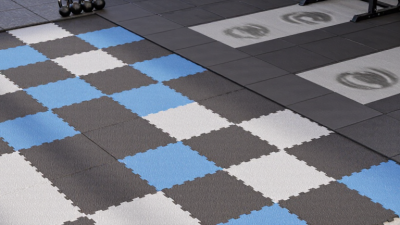
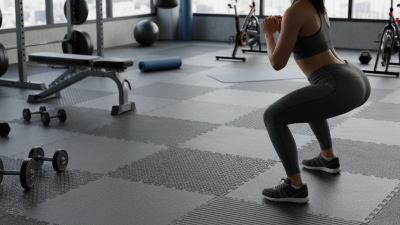
Interlocking tiles cover uneven spaces and allow damaged sections to be replaced. Gym mats are thicker, helping absorb impact from weights and equipment. Entrance scraper mats trap grit before it travels indoors. Plain rubber sheets offer broad, continuous coverage, but seams and floor compatibility deserve attention.

Grand View Research estimated the global rubber flooring market at about US$1.8 billion in 2022, forecasting 5.4% annual growth from 2023 to 2030. That figure describes the wider flooring market, not mat types alone.

A catalog photo can hide real trade-offs: drainage holes collect debris, and deep patterns take longer to clean. Check thickness, backing, and cleaning needs against the actual room. Some labels overlap, so compare construction, not just names.

How to Match Mat Types to Different Applications

Choosing rubber matting starts with the task beneath people’s feet, not the product name. In kitchens and wash-down areas, open-hole drainage mats let water and debris pass through; solid rubber suits dry, abrasive work zones better. For long standing shifts, cushioned anti-fatigue mats can improve underfoot comfort, but they should not create a raised trip edge. BLS reported 450,540 workplace cases involving days away from work due to falls, slips, and trips in 2022. That figure covers many causes, not mat performance, but it makes surface conditions worth checking carefully. Details matter.

Match thickness, texture, and cleaning needs to the site. Ribbed runners can guide foot traffic through corridors, while interlocking rubber tiles offer replaceable sections in workshops or gyms. Electrical work may require tested insulating mats with ratings suited to the equipment; ordinary rubber matting is not a substitute. The BLS 2023 survey recorded a private-industry injury and illness rate of 2.4 cases per 100 full-time workers, down from 2.7 in 2022. Those broad figures cannot prove one mat type is safer. Inspect seams, edges, drainage, and wear in the actual environment. A mat that works on a dry factory floor may curl or trap residue near a sink. That can happen.

Top 10 Types of Rubber Floor Matting for Buyers? - How to Match Mat Types to Different Applications

Mat type Typical construction or surface Main benefits Suitable applications Buyer considerations
1. Rubber runner mats Long, narrow sheets with a ribbed, textured, or patterned surface. Cover walkways and work lanes; can provide traction and help protect the floor. Workshops, corridors, service areas, and assembly lines. Check roll width, length, thickness, edge treatment, and whether the mat can be secured against movement.
2. Anti-fatigue mats Cushioned rubber or rubber-blend mats, sometimes with a textured top and beveled edges. Adds underfoot cushioning for people who stand for extended periods. Packing stations, cashier areas, production benches, and standing workstations. Choose cushioning and thickness for the task; avoid mats that create trip edges or interfere with carts and chairs.
3. Drainage mats Open-grid or perforated rubber construction that allows liquids and debris to pass through. Helps keep the standing surface above pooled water and supports drainage beneath the mat. Wet work areas, wash-down zones, food-service back areas, and locker rooms. Confirm drainage openings suit the debris and footwear; check cleaning access and compatibility with cleaning chemicals.
4. Coin-pattern mats Flat rubber sheet with a repeating raised circular pattern. Provides a textured walking surface and broad floor coverage. Commercial walkways, service counters, workshops, and vehicle interiors. Check surface grip, sheet thickness, cleaning requirements, and suitability for the expected traffic.
5. Diamond-plate mats Rubber sheet with raised diamond-shaped tread. Textured surface can improve traction and resist everyday scuffing in busy areas. Industrial walkways, loading areas, workshops, and utility rooms. Review the tread profile, thickness, and slip-test information for the conditions where it will be used.
6. Ribbed mats Rubber surface formed with parallel raised ribs, commonly running lengthwise. Provides directional texture and can channel small amounts of liquid along the grooves. Workstation lanes, counters, corridors, and light-duty industrial spaces. Consider rib direction, ease of cleaning, and whether the pattern is suitable for wheeled equipment.
7. Studded mats Rubber sheet with closely spaced raised studs or buttons. Creates a textured surface and may allow limited movement of air or liquid beneath the mat. Industrial stations, service areas, and some wet or oily work zones when the product is rated for them. Verify chemical resistance and slip performance for the actual liquid present; texture alone does not guarantee safety.
8. Entrance scraper mats Heavy-duty rubber mat with a pronounced scraping pattern or raised borders. Helps remove and contain dirt and moisture tracked in on footwear. Building entrances, external doorways, and transition areas. Match dimensions to the entry, keep edges flat, and select a design suited to indoor or outdoor exposure.
9. Interlocking rubber tiles Modular tiles with connecting edges; available in solid or textured formats. Allows coverage of larger or irregular areas, and individual tiles can be replaced if damaged. Gyms, workshops, utility rooms, and temporary or reconfigurable floor areas. Check joint stability, subfloor requirements, tile thickness, and suitability for heavy rolling loads.
10. Livestock and stable mats Thick, durable rubber mats, often with a textured top and interlocking or straight edges. Provides a resilient covering over a firm base and can make stall floors easier to clean than loose bedding alone. Horse stalls, livestock pens, and animal-care areas. Select suitable thickness and fit; ensure the floor has appropriate drainage and use bedding where required for the animals.

Selection note: Confirm dimensions, thickness, material composition, cleaning requirements, and any relevant slip-resistance or chemical-resistance test data for the intended site conditions.

What Buyers Should Check Before Choosing Rubber Mats

Grand View Research valued the global rubber flooring market at about US$1.6 billion in 2022. Its 2023 report forecast annual growth of 5.6% through 2030.

More options do not guarantee better performance. Check the mat’s intended setting: a wet wash area needs different surface texture and drainage than a dry workshop.

Ask for documented slip testing, and compare results only when the same test method was used. Look for thickness, density, and load ratings; thickness alone can mislead.

I would test a sample under the actual equipment, because a cart wheel can expose weaknesses that a hand press misses.

Fit matters.

Measure the floor, including door swings and drainage channels, before ordering. Check that edges lie flat and that adjoining mats will not create trip points.

For chemical or heat exposure, compare the manufacturer’s resistance data with the substances and temperatures on site.

If recycled content matters, request its stated percentage and supporting documentation; color is not proof. Also confirm cleaning instructions and replacement availability.

Check the edges. Small details are easy to overlook, and I would not assume a heavier mat is automatically safer or more durable.